Exploring St. Thomas Parish: Rainforest Gullies and Inland Barbados
Barbados is partitioned into eleven historic parishes, but only two—St. Thomas and St. George—are completely landlocked, devoid of coastline or sandy shores. Far from being a disadvantage, this geographical seclusion has preserved St. Thomas Parish as the green, untamed ecological lung of the island. Dominated by dramatic karst sinkholes, prehistoric subterranean river caverns, and dense mahogany forests, St. Thomas offers an authentic glimpse into the wild Caribbean before mass beach tourism took hold.
The Geology of Inland Barbados: Karst Topography
To understand St. Thomas Parish, one must understand its geological birth. Unlike neighboring volcanic islands such as St. Lucia or Dominica, Barbados is an accretionary prism capped with coral limestone. Tectonic collisions gradually thrust ancient coral reefs high above the ocean surface over hundreds of thousands of years.
In St. Thomas, slightly acidic tropical rainwater dissolved the porous calcite rock, creating a complex underground honeycomb of caverns and subterranean rivers—exemplified by Harrison’s Cave. When subterranean cavern ceilings grew too thin to support the weight of the forest above, catastrophic collapses occurred, transforming underground rivers into deep, sheer-sided ravines known locally as gullies.
Key Highlights of St. Thomas Parish
1. Harrison’s Cave Eco-Adventure Park
The parish’s flagship landmark. A world-class subterranean show-cave operated by Chukka Caribbean, offering electric tram rides, wild challenge spelunking, and forest ziplining over 100 feet above the valley floor.
2. Welchman Hall Gully Nature Reserve
A protected three-quarter-mile botanical gully owned by the Barbados National Trust. Home to troops of wild green monkeys, giant bearded fig trees, and historical grapefruit trees (the grapefruit was first hybridised right here in Barbados in the 18th century!).
3. Clifton Hall Great House
Dating back to 1656, this beautifully restored Georgian plantation estate showcases classical Barbadian architecture, Italian marble chimneys, and rolling highland vistas.
4. Highland Agricultural Ridges
Picturesque patchwork hillsides planted with sugarcane, cassava, sweet potatoes, and banana groves, dotted with colourful traditional chattel houses.
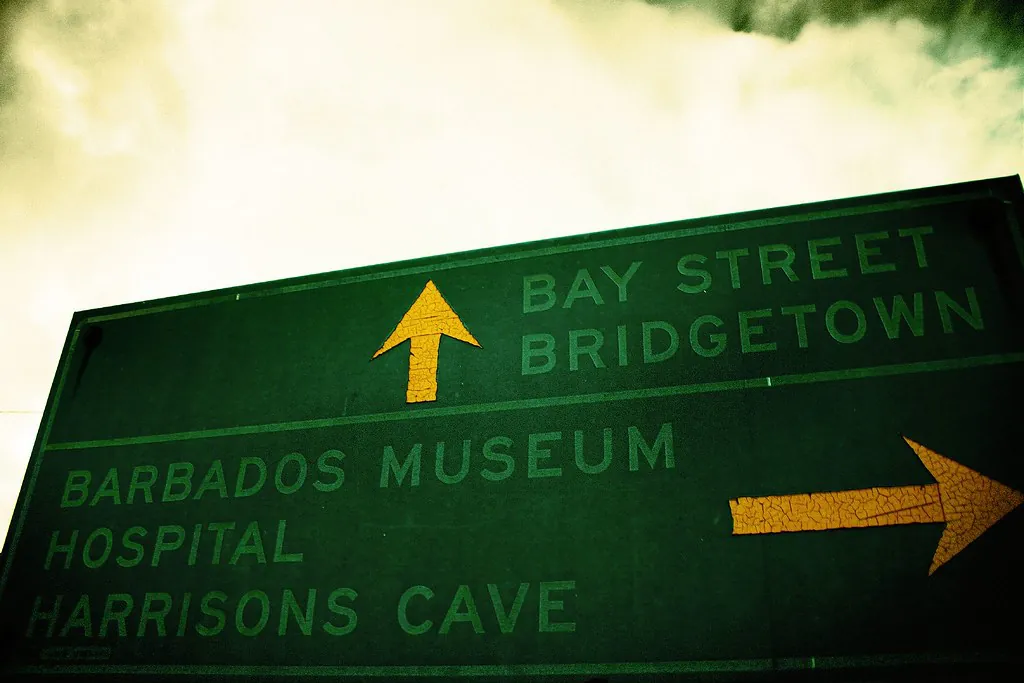
Wildlife of the Inland Gullies: What to Look For
- Bajan Green Monkeys (Chlorocebus sabaeus): Brought from West Africa in the 17th century, these charismatic primates thrive in the fruit-rich gullies of St. Thomas. Best spotted in the early morning or late afternoon.
- Antillean Crested Hummingbirds: Tiny, iridescent green jewels darting among bright red hibiscus and ginger blossoms.
- Whistling Frogs: As sunset blankets the parish, thousands of tiny tree frogs begin their melodious chorus, providing the iconic acoustic soundtrack to every Caribbean night.
- Yellow-bellied Grassquits & Carib Grackles: Friendly native songbirds that frequent village rum shops and garden terraces.
Cultural Traditions & Inland Village Life
Life in St. Thomas moves at an unhurried, generous pace. The parish has maintained its strong agrarian identity. On Saturday mornings, roadside stalls in villages like Porters, Bloomsbury, and Welchman Hall burst to life with local farmers selling fresh breadfruit, sugar apples, sweet soursop, and freshly harvested honey.
Visiting a St. Thomas rum shop is a cultural must. Here, locals gather to play fiercely contested games of dominoes (slammed onto wooden tables with thunderous authority) while discussing island politics and cricket over flasks of Mount Gay rum and ice.
To plan your excursion to St. Thomas, check our comprehensive guides: How to Get to Harrison’s Cave, Tickets & Passes, and Top Barbados Hidden Gems.