Best Caves and Underground Wonders to Visit in Barbados
Active crystallized limestone stream cave. Visited via accessible electric tram or spelunking tours.
Sea cliff cave with rock pools, sea anemones, and dramatic natural window openings facing Atlantic breakers.
Ancient cavern whose ceiling collapsed millenia ago, now an open-air tropical rainforest gully home to green monkeys.
Barbados beneath the surface: choosing the right underground experience
Barbados looks wonderfully flat and sun-drenched from the road, yet beneath the cane fields and tropical gullies lies a world shaped by coral limestone and water. That geology gives the island several very different ways to go underground. In central St. Thomas, Harrison’s Cave is an inland cave system where water has worked slowly through limestone, leaving chambers decorated with stalactites and stalagmites, flowing streams and waterfalls. At North Point in St. Lucy, Animal Flower Cave faces the Atlantic, so its character comes from the meeting of limestone and powerful coastal waves.
Those two experiences are the useful starting point for anyone comparing caves in Barbados. Harrison’s Cave suits travellers who want an organised underground journey with a tram and guided interpretation, while Animal Flower Cave has the rawer feel of a natural sea cave reached by stairs. Welchman Hall Gully adds another piece of the geological story above ground, and places such as Coles Cave belong to the more adventurous side of Barbados’s subterranean landscape.
Harrison’s Cave Eco-Adventure Park: the classic inland cavern experience
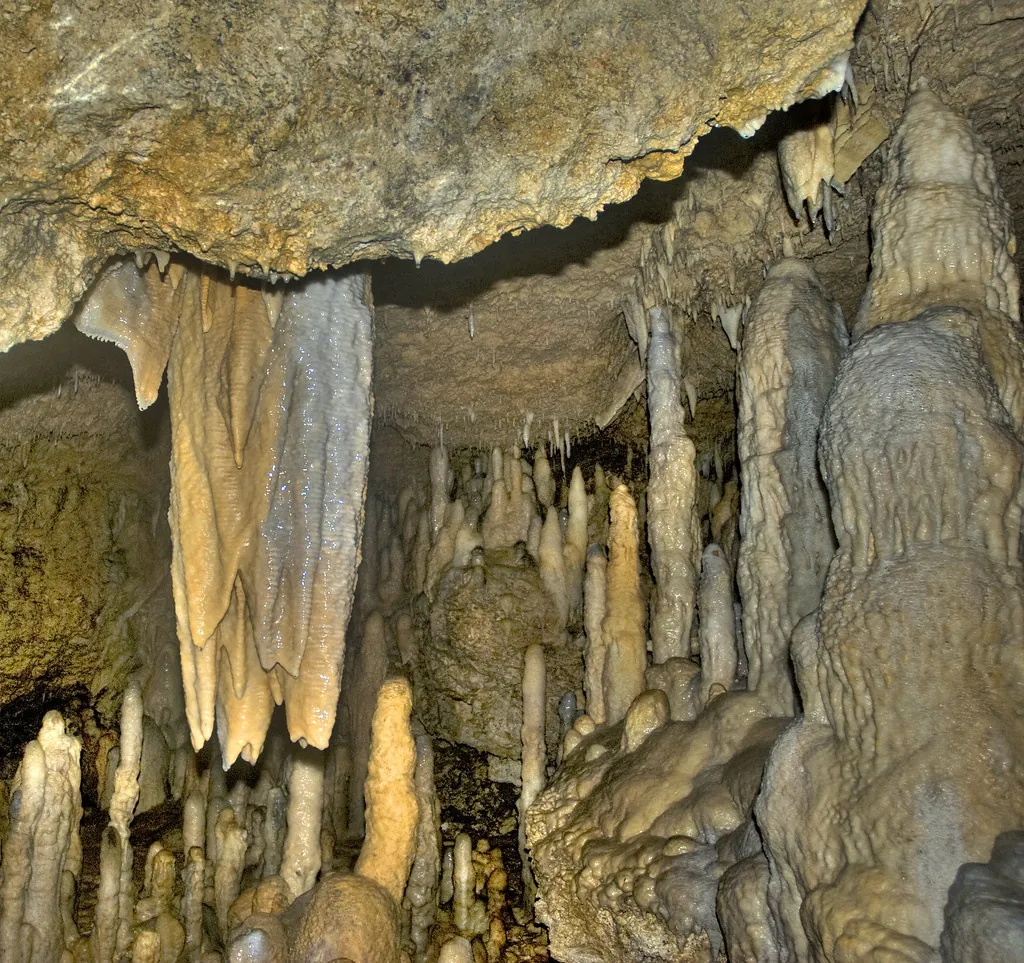
The Harrison’s Cave Eco-Adventure Park is in Allen View, St. Thomas, roughly 8.4 km from Bridgetown according to the Barbados Tourism Marketing Inc. Its signature experience is the tram journey into the crystallised limestone cave, where running water, underground pools, stalactites, stalagmites and waterfalls appear in the darkness around the route. The official Barbados tourism guide lists the attraction among the island’s natural landmarks and describes the tram journey alongside streams, waterfalls and major cave formations.
For many visitors, the tram is what makes Harrison Cave Barbados such an easy introduction to speleology. You sit back while the tram carries the group through the cavern, with a guide explaining the formations and underground waterways along the route. The atmosphere changes quickly once the daylight disappears: warm Caribbean sunshine gives way to cool, damp limestone walls, and the lights pick out stalactites, stalagmites and other limestone formations along the cavern walls and ceilings.
Harrison’s Cave is the choice for a proper underground sightseeing experience without turning your holiday into an expedition.
The park is also much broader than the cave ride alone. The wider visitor experience also includes a nature walk and bird aviary, according to Barbados tourism information. That makes it particularly handy for families or mixed groups where one person wants limestone formations while another has arrived with a strong desire to zip through the canopy.
What makes Harrison’s Cave geologically different
Harrison’s Cave is an inland solution cave rather than a chamber punched open by Atlantic surf. Rainwater moves through the island’s permeable limestone, gradually dissolving and enlarging underground passages. Over long periods, mineral-rich water leaves deposits behind, building the stalactites hanging from ceilings and stalagmites rising from cave floors.
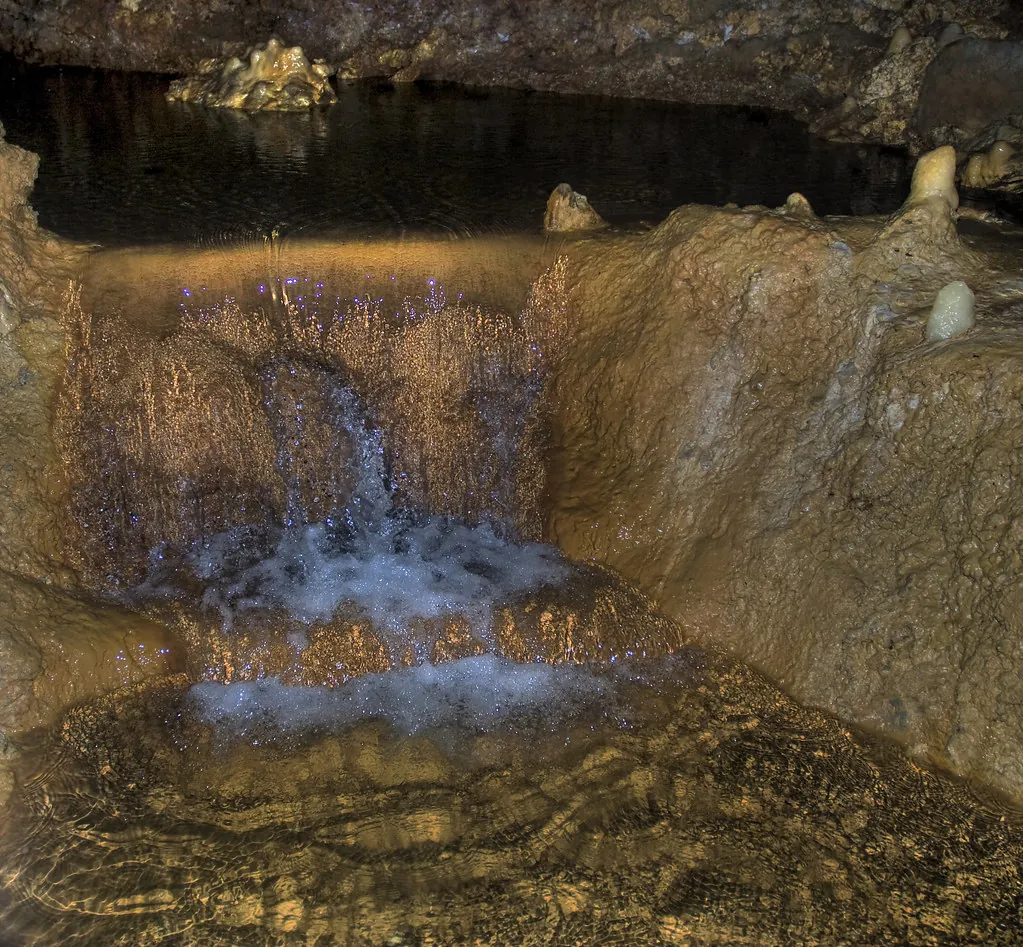
Water remains part of the experience today. Streams run through sections of the cavern, pools catch the reflected lighting and waterfalls appear within the larger chambers. Barbados tourism material describes the cave as an active system with underground waterways, while current tourism information also places the cave among the island’s principal natural attractions.
The distinction matters when comparing it with the island’s sea caves. Inside Harrison’s Cave, the dominant forces are groundwater and limestone chemistry. At Animal Flower Cave, the Atlantic is part of the architecture, carving and entering the coastal openings. One feels like an underground landscape that has developed quietly inland; the other feels connected to the ocean every time the surf rolls through.
Animal Flower Cave: Barbados’s accessible sea cave
At North Point in St. Lucy, Animal Flower Cave opens directly towards the Atlantic. The Barbados Tourism Marketing Inc. describes it as the island’s accessible sea cave, around 25.4 km from Bridgetown, making it considerably farther north than Harrison’s Cave for travellers based around the capital.
The experience is naturally more exposed to the coast. Stairs lead down into the cave, where ocean-facing openings frame the Atlantic and natural rock pools occupy the chambers. The setting is part of the attraction: you can look from inside the limestone towards open sea, then turn back towards the rock formations around you.
The current operator advises that access and swimming depend on sea conditions. A reliable current 2026 admission price and complete operating schedule are not established by the supplied Golden Facts, so check the operator before visiting. Conditions can change, so checking the operator before setting out is sensible, especially when swimming is part of your plan.
Swimming inside Animal Flower Cave
Animal Flower Cave can include swimming, but access to the water is governed by Atlantic conditions rather than a fixed timetable. The operator states that swimming is sometimes unavailable when waves are high or strong and warns that waves can enter the cave unexpectedly.
If the sea is lively, treat the pool as a viewing point rather than a swimming session. Teh ocean gets the final say here, and it does not care about your itinerary.
The operator lists the final cave chamber’s natural pool as reaching depths of up to about 8 ft. Anyone who is uncomfortable around unpredictable surf should skip the swim when conditions are questionable. Bring a towel and swimwear if conditions are suitable, but keep the coastal nature of the site firmly in mind.
Welchman Hall Gully: the cave landscape after collapse
Welchman Hall Gully is a fascinating companion to Harrison’s Cave because much of its landscape exists where cave roofs collapsed. The gully is in St. Thomas and is geologically connected with the Harrison’s Cave area. Along its walking route, visitors can encounter limestone formations and evidence of stalactites and stalagmites that belong to the same broader subterranean story.
It is an above-ground experience, so it suits travellers who want to understand Barbados’s limestone country without committing to a cave tour. The shaded path passes through tropical vegetation, and the gully is also known for its green monkeys. The official Barbados tourism information includes Welchman Hall Gully among the island’s nature trails, while local tourism information describes its connection with collapsed cave roofs.
Pairing the gully with Harrison’s Cave makes geographic sense because the two attractions sit close together. You get the underground expression of the limestone landscape in the cave, then walk through a surface landscape shaped by the collapse and erosion of similar formations.
Coles Cave and Barbados’s more adventurous underground side
Coles Cave belongs on a list of Barbados natural landmarks, although it should not be confused with the polished visitor experience at Harrison’s Cave. Barbados tourism material lists Coles Cave alongside Harrison’s Cave, Animal Flower Cave and The Spout as notable natural landmarks, but access and the physical demands of less-developed cave environments are a different matter.
For independent travellers, the key distinction is preparation. A structured tram tour has a defined route, trained guides and established visitor infrastructure. Specialist caving can involve crawling, climbing, wet passages and confined spaces, so anyone considering a more adventurous underground outing should use an appropriate specialist operator and follow its current equipment and experience requirements.
The Spout and Barbados’s other coastal geology
The Spout is another useful reminder that Barbados’s underground story does not end at conventional cave entrances. It is better understood as a coastal geological feature than as a cave tour, with the Atlantic shaping the limestone landscape through persistent wave action.
The northern and eastern coastlines are particularly useful for seeing what moving seawater does to coral limestone. Sea cliffs, openings, blowholes and wave-cut platforms give the island a completely different geological mood from the sheltered chambers of Harrison’s Cave.
Cave comparison by travel style
| Experience | Setting | Best suited to | Physical demands |
|---|---|---|---|
| Harrison’s Cave | Inland St. Thomas | Families, first-time cave visitors, mixed groups | Low to moderate on the tram experience |
| Animal Flower Cave | Atlantic coast, St. Lucy | Coastal explorers, swimmers when conditions allow, photographers | Stairs and uneven natural surfaces |
| Welchman Hall Gully | Inland St. Thomas | Walkers, nature lovers, travellers pairing attractions | Walking on a gully trail |
| Coles Cave | Inland limestone landscape | Experienced adventure travellers with suitable guidance | Potentially demanding depending on access and route |
| The Spout | Coastal Barbados | Travellers interested in coastal geology | Outdoor walking and coastal terrain |
For older travellers or visitors with limited mobility, Harrison’s Cave is the most straightforward place to investigate because the signature experience uses a tram rather than requiring a long underground walk. Accessibility can still depend on the current operating arrangements, so check the park’s latest guidance before travelling if a wheelchair or other mobility aid is involved.
Animal Flower Cave requires more attention to footing because reaching the cave involves stairs and a natural environment shaped by the sea. Travellers who dislike slippery surfaces, strong surf or enclosed spaces may find the viewing experience more comfortable than the swimming experience.
Photographers have a different decision to make. Harrison’s Cave gives you controlled views of mineral formations, pools and underground water, while Animal Flower Cave adds windows onto the Atlantic, changing light and dramatic coastal scenery. Bring a camera you can comfortably handle in damp conditions, and keep a secure grip on phones near water.
Where each cave fits geographically
Location can save a surprising amount of holiday time. Harrison’s Cave is in Allen View, St. Thomas, and the official Barbados tourism listing puts it about 8.4 km from Bridgetown. Animal Flower Cave is at North Point in St. Lucy, around 25.4 km from Bridgetown. Those distances make Harrison’s Cave easier to fold into a central-island itinerary, while Animal Flower Cave makes more sense when your day already points towards northern Barbados.
Central Barbados
- Harrison’s Cave
- Welchman Hall Gully
- St. Thomas limestone landscape
Northern Barbados
- Animal Flower Cave
- North Point coastline
- The Spout and other coastal formations
Prices, hours and booking considerations
Published attraction information changes, so cave visits deserve a quick check before you leave the hotel. At the time of writing, Barbados tourism lists Harrison’s Cave at Allen View with tour times shown from 10:30am to 2:30pm on its published operating days, while Animal Flower Cave’s own site lists Tuesday to Sunday, 9:30am to 4pm, subject to waves.
Animal Flower Cave publishes BDS $40 for adults and BDS $20 for children under 12. Harrison’s Cave pricing varies by the experience or package selected, particularly when the cave is combined with adventure activities or transfers, so the current booking information should be checked before treating any third-party price as a standard admission figure.
For current official information, the Barbados Tourism Marketing Inc. Harrison’s Cave listing is the sensible starting point. For Animal Flower Cave, check the operator’s current cave information, particularly if swimming is important to your plans. The wider official Barbados natural-landmarks guide is useful when building a day around several geological attractions.
How to combine underground attractions in one Barbados day
Harrison’s Cave and Welchman Hall Gully make the most logical inland pairing. The two experiences explain different parts of the same limestone landscape, and neither requires a long journey across the island before you can move on to the next stop.
Animal Flower Cave works better as the anchor for a northern-coast day. Give yourself enough time for the drive, the cave visit and the surrounding coastal scenery rather than trying to cram the site into a hurried morning before heading back south. Sea conditions can change the cave experience, so keeping a little flexibility in the schedule is particularly sensible here.
Travellers arriving by cruise ship should also pay attention to timing. Harrison’s Cave is geographically closer to Bridgetown, while Animal Flower Cave takes you much farther north. A booked excursion with transport can simplify the day, but independent visitors with a rental car have more freedom to adjust their route around weather and opening conditions.
Quick decision guide
- Choose Harrison’s Cave if you want a guided underground experience with tram access, dramatic limestone formations and flowing underground water.
- Choose Animal Flower Cave if Atlantic scenery, natural rock pools and the possibility of swimming appeal to you, provided sea conditions are suitable.
- Add Welchman Hall Gully if you want to understand how collapsed cave roofs shaped the landscape above Harrison’s Cave.
- Investigate specialist caving if crawling, climbing and wet passages sound like your idea of a proper adventure, but use suitable guidance and equipment.
- Visit The Spout or northern coastal formations when your interest is broader geological sightseeing rather than a conventional underground tour.
Planning your Harrison’s Cave visit
Harrison’s Cave is the natural starting point for travellers who want to see the limestone heart of Barbados without taking on a specialist caving expedition. The tram keeps the main experience approachable, while the surrounding eco-adventure park gives active visitors reasons to stay longer. Sensible footwear still matters, particularly if you plan to add outdoor trails or adventure activities after the cave.
For deeper planning, the site’s dedicated Harrison’s Cave tickets and tours guide covers booking choices, while the transport guide deals with getting to Allen View. Visitors planning the wider adventure park can use the cave tours, ziplines and eco-adventures guide, and the visitor rules and guidelines are worth reading before packing your day bag.
The best cave for you depends less on a universal list and more on what you want the island to feel like that day. Harrison’s Cave takes you beneath the interior of Barbados; Animal Flower Cave puts you where limestone meets the Atlantic. Between them, Welchman Hall Gully and the island’s coastal formations fill in the missing geological pieces, turning a simple cave trip into a much better understanding of the island itself.
Experience Harrison’s Cave for Yourself
The most complete underground journey in the Caribbean. Reserve your departure slot with free cancellation.